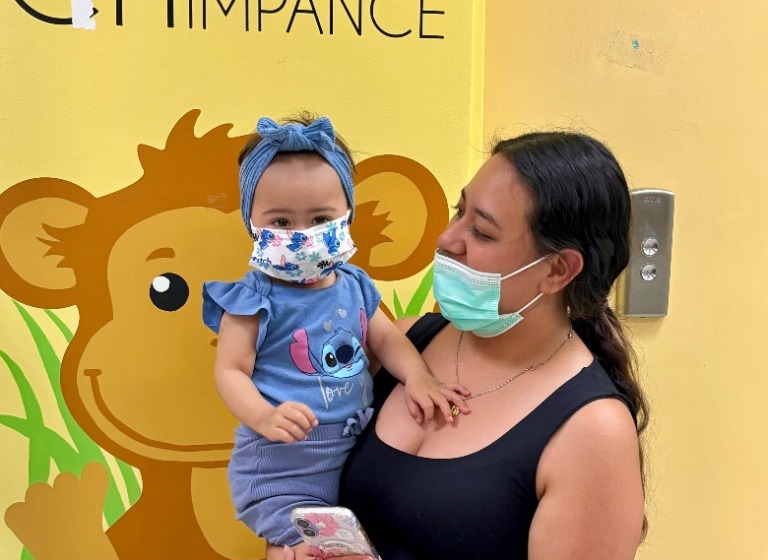
At just one year and ten months old, Ailani Emilia Trejo Amador's days stopped being about toys and children's laughter, and filled instead with hospitals, tests, and the shadow of hepatoblastoma, an aggressive liver cancer that threatened her young life.
Despite the difficult tests and exhaustion, Ailani never lost her curious gaze or the smile that moved everyone who met her. She was a small warrior in body, but immense in courage. Science offered her a door to life: a living-donor liver transplant.
The diagnosis was clear, and the financial goal to achieve the transplant was a giant her family could not face alone. That's why the Fight for Life Club Foundation joined that battle, channeling the help of hundreds of donors so that every peso would go directly to the little girl's health.
Today, that story has the ending we dreamed of: Ailani was successfully transplanted. She received part of a liver from a living family donor, and today she has a whole future ahead of her to smile, play, and grow up healthy. Her case is living proof that this model — the alliance between the INP and Fight For Life Club — works.
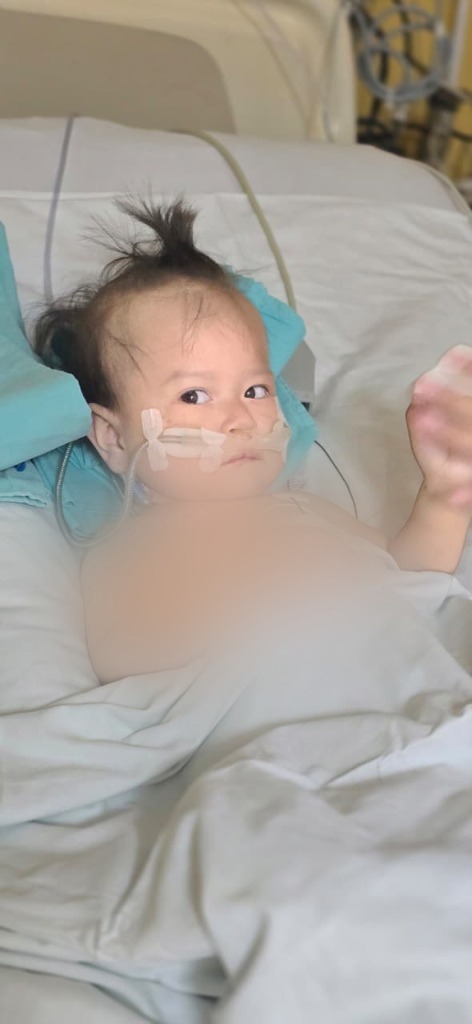
Ailani during her treatment at the National Institute of Pediatrics (INP), on her way to her transplant.

Between appointments and tests, Ailani never stopped being a curious little girl who wanted to see the world.
Her story doesn't end here
Ailani already received her transplant — but the program that saved her is still active, and right now there are 4 more children waiting for a pediatric liver transplant, some in more critical condition than the one Ailani faced. Some have a family donor under evaluation or already approved; others remain on the CENATRA waiting list for a deceased donor. We are protecting their identities until their families authorize sharing their stories, just as was done with Ailani's in her time. In the meantime, every donation today funds supplies, medical equipment, and the same process that already worked once.
★
The 4 children waiting today
This is Fight For Life Club's active campaign right now: 4 children waiting for a pediatric liver transplant at the INP. Their families have authorized us to share their first names — Cassiel, Madelyne, Elizabeth, and Eliel. Their full stories and photos will follow as soon as each family authorizes that step, just as was done with Ailani when her time came.
Photo pending authorization
Cassiel
Boy · Profile pending family authorization
Case goal$286,000 MXN
Photo pending authorization
Madelyne
Girl · Profile pending family authorization
Case goal$286,000 MXN
Photo pending authorization
Elizabeth
Girl · Profile pending family authorization
Case goal$286,000 MXN
Photo pending authorization
Eliel
Boy · Profile pending family authorization
Case goal$286,000 MXN
Total campaign goal
$1,144,000 MXN
$286,000 MXN for each of the 4 children — the same support model that already worked for Ailani. We will update this bar with real fundraising progress.
Help the 4 children of today have the same ending as Ailani
Every donation goes directly to one of these 4 real cases, with total transparency. Don't wait until the end of the article to act: every day counts.
$500
Contributes to lab tests for the recipient-donor pair
$1,500
Contributes to pre-surgical evaluation supplies
$5,000
Contributes directly to the transplant supply kit
Other amount
Every peso helps, no matter the amount
Goal: $1,144,000 MXN — $286,000 MXN for each of the 4 children in process. The difference is always covered by the public campaign, never by cash payments from the family.
I want to help the 4 children
1
Why a child needs a liver transplant
Ailani's story is that of one girl, but it is also the story of a much bigger problem: every year, somewhere in Mexico, a child develops a liver disease that only a transplant can solve. Understanding why helps explain why Fight For Life Club's work is urgent.
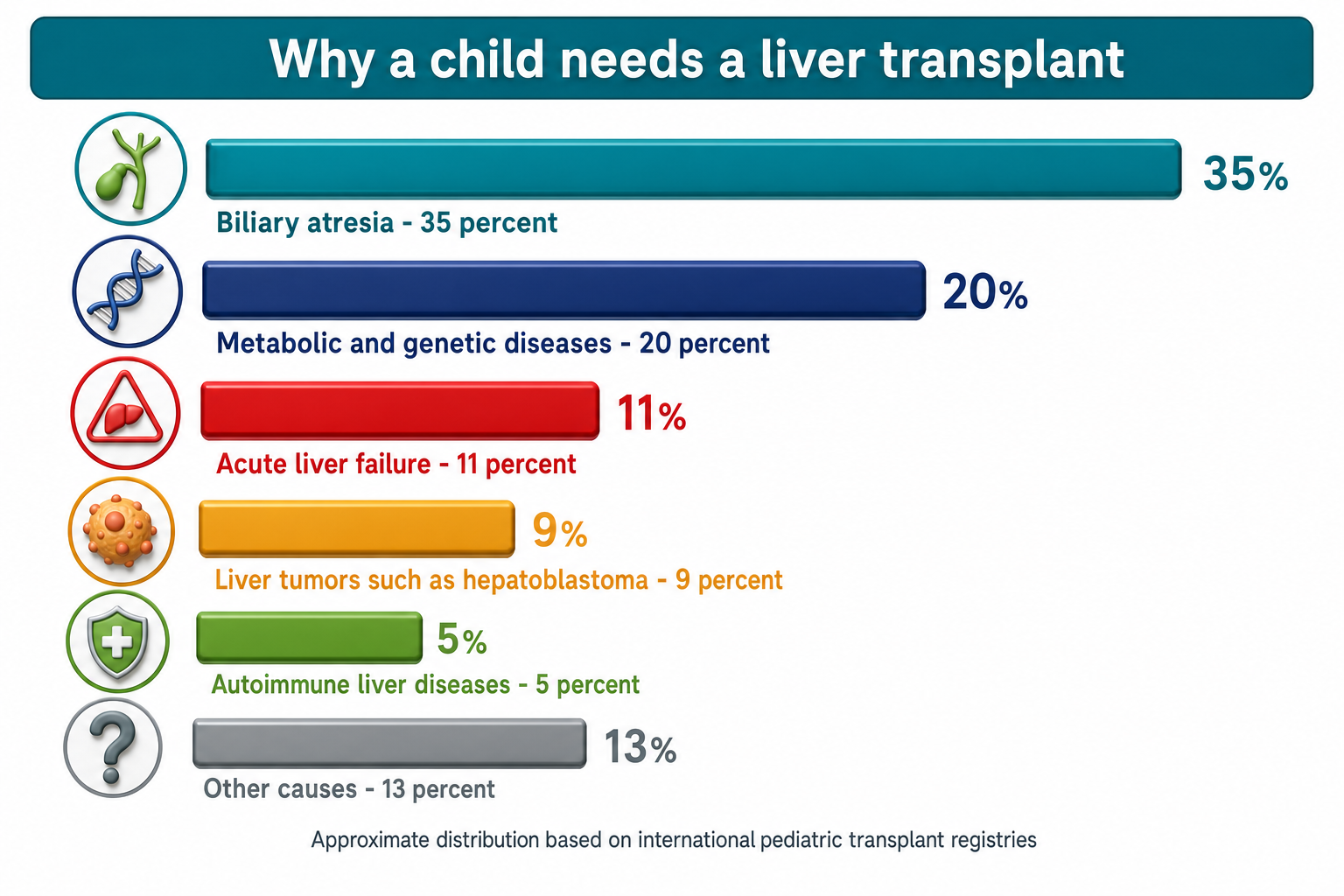
Approximate distribution according to international registries (United States, Europe) — no equivalent consolidated registry exists for Mexico, so these figures should be read as international reference, not national data.
Biliary atresia — a progressive obstruction of the bile ducts present from birth — is by far the most frequent cause. Even when the Kasai surgery (a procedure that seeks to restore bile flow) is initially successful, most children will eventually need a transplant: long-term follow-up studies show that survival with the native liver drops steadily over time, from 40-89% at 5 years to 22-35% beyond 20 years, depending on the series and population studied. Without any treatment, the disease progresses to cirrhosis and liver failure in early childhood.
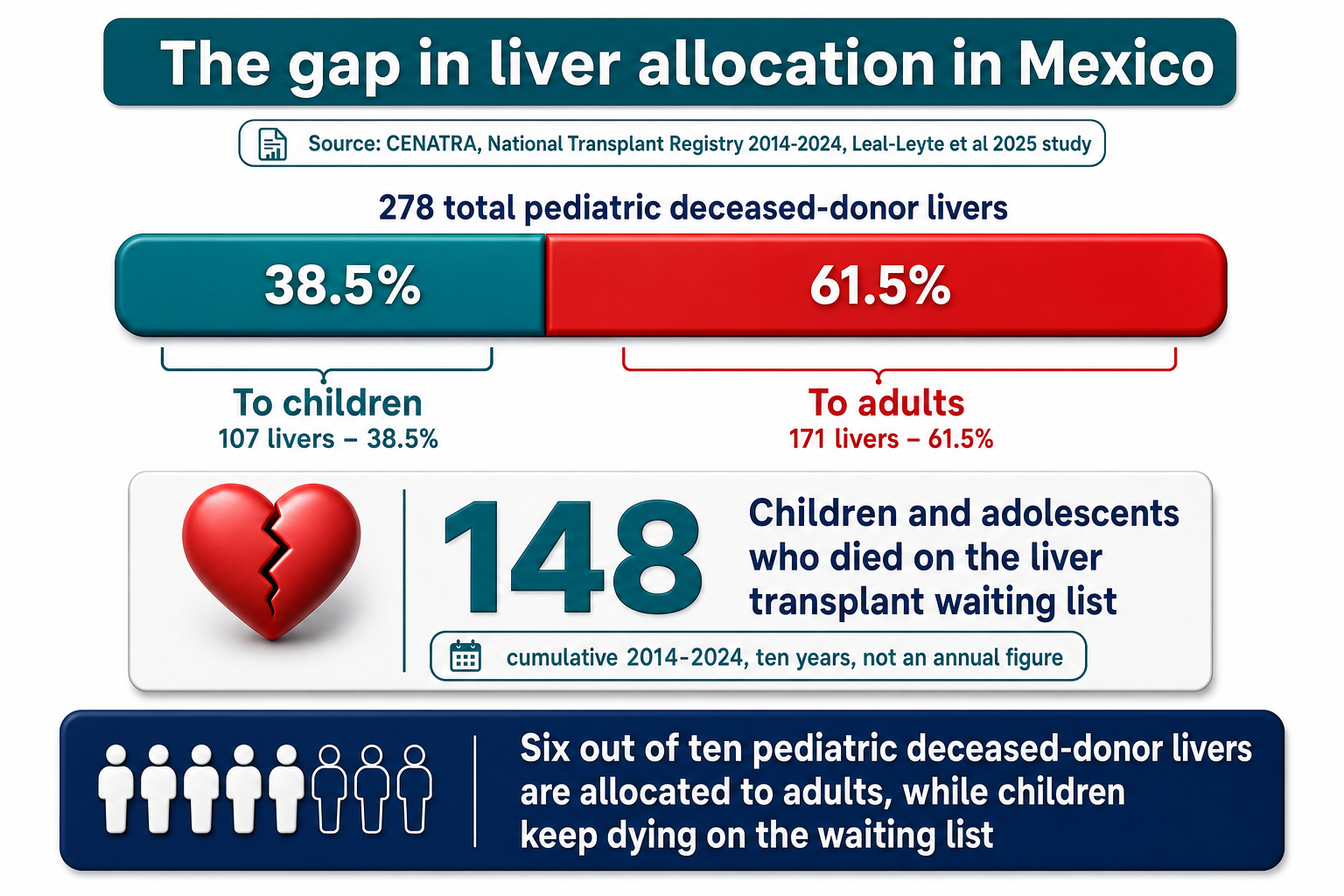
Source: CENATRA National Transplant Registry, via Leal-Leyte et al. (2025), Pediatric Transplantation — cumulative decade figures, not annual.
A national analysis published in Pediatric Transplantation (Leal-Leyte et al., 2025), based on CENATRA's National Transplant Registry, reveals a critical gap: between 2014 and 2024, 278 livers from deceased donors under 18 were identified, but only 107 — 38.5% — reached pediatric patients, while 171 — 61.5% — were allocated to adult recipients. In that same ten-year period, 148 girls, boys, and adolescents died while waiting for a liver transplant. This data does not describe a living-donation problem — that's a separate issue — it documents a public policy failure in how deceased-donor organs are prioritized and distributed in Mexico.
— Leal-Leyte et al., Pediatric Transplantation, 2025, DOI: 10.1111/petr.70144, CENATRA database 2014-2024
The response to this gap must be verifiable and systemic: transparent allocation rules, independent audits of decisions, public data broken down by age, and a serious review of the priority given to pediatric recipients. The living-donor transplant program the INP started in 2025 — backed by Fight For Life Club — is a complementary path that is already saving lives today, but it does not replace the system's obligation to correct these inequities in deceased-donor organ allocation.
190
people of all ages on the liver transplant waiting list in Mexico at the close of 2025
Source: CENATRA, BEI-CENATRA Vol. X, 2025
48
of them were girls, boys, and adolescents ages 0 to 19 — 1 in every 4
Source: CENATRA, BEI-CENATRA Vol. X, 2025
2
What is hepatoblastoma?
Hepatoblastoma is the most common malignant liver tumor in childhood. It is a rare cancer — occurring in approximately 0.5 to 1.5 cases per million children per year — and mainly affects infants and young children: nearly 90% of cases are diagnosed before age 4, with a typical peak around 18 months of age, exactly Ailani's age.
0.5–1.5
cases per million children per year worldwide
Source: Mexican review, Medigraphic 2015
~18 months
typical age at diagnosis
Source: Rev Mex Cir Ped 2015
~80%
overall 5-year survival with complete multimodal treatment
Source: Cancers (MDPI) 2019
~85%
10-year survival after primary liver transplant
Source: OAE Publish review 2022
Standard treatment combines chemotherapy (usually cisplatin-based) with surgery. When the tumor can be completely removed while leaving enough healthy liver, a liver resection is performed. But when the tumor invades all four liver sectors (what doctors call PRETEXT IV) or involves essential vascular structures, the only curative option is a liver transplant.
"Liver transplantation has become the standard of care for unresectable pediatric liver tumors. Long-term survival exceeds 80% in transplants for hepatoblastoma."
— Sakamoto et al., Liver Transplantation, 2024
3
The gift of a living donor
When a child needs a liver transplant, there are two paths: waiting for an organ from a deceased donor, or receiving part of a liver from a living donor, usually an adult family member. The liver has a unique capacity in the human body: it can regenerate. The donor gives between 40% and 50% of their liver, which grows back within months; and the transplanted segment grows inside the recipient until it covers all the function their body needs.
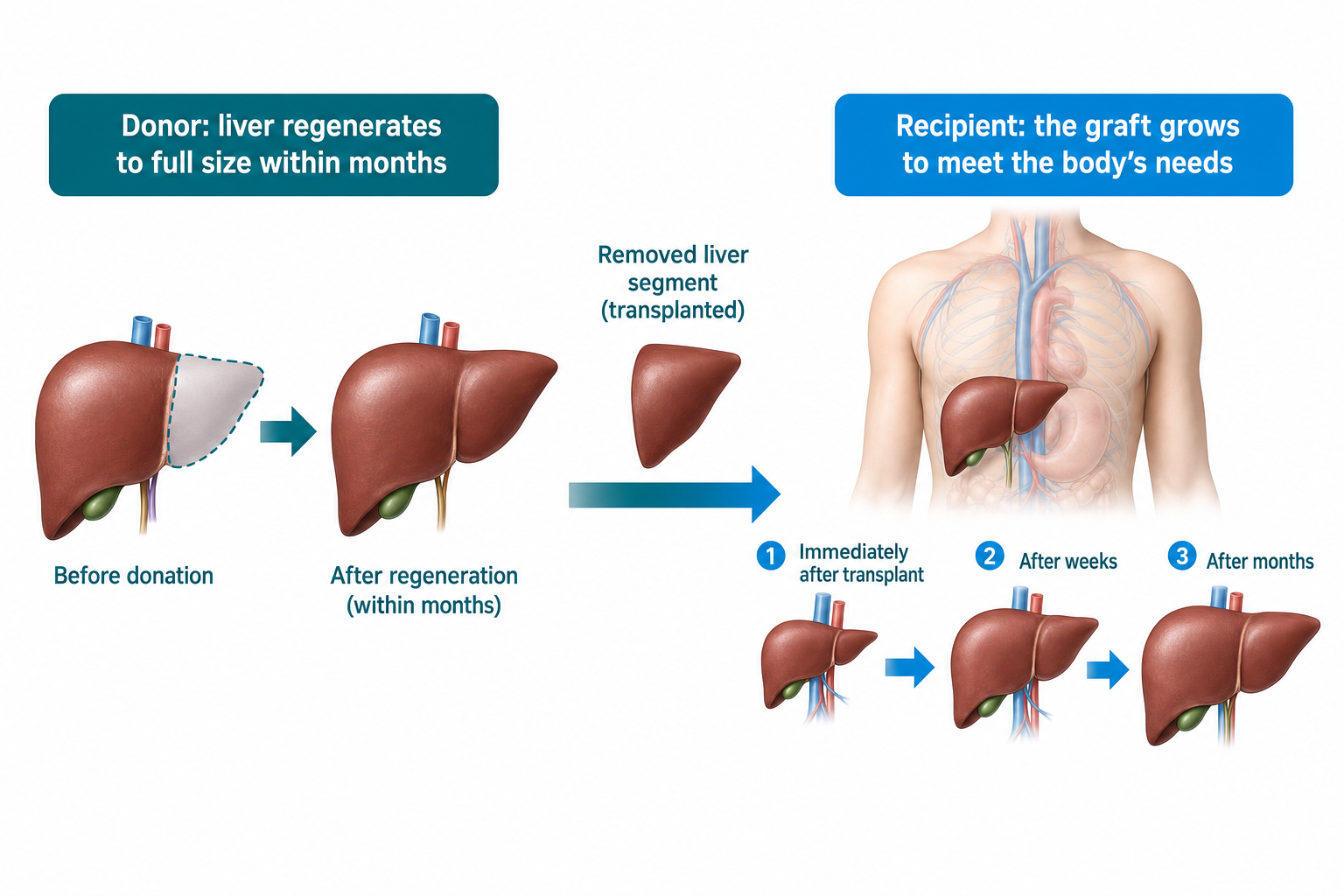
The donor's liver regenerates; the transplanted graft grows until it covers the recipient's function.
The scientific evidence is compelling: children transplanted with a living donor have better survival than those waiting for a deceased-donor organ, in part because they don't have to wait for a compatible organ to appear while their disease progresses.
72%
lower waitlist mortality risk when a living donor is available
Source: Li et al., Liver Transplantation, 2025
66%
5-year survival in living-donor transplant for hepatoblastoma
Source: survival factors study, esmed.org
The magic of a living donor is not only in the medicine: it's in the fact that two people walk out of the hospital, side by side. The donor gave a part of themselves; the recipient received a second life. Neither of them stops being who they were.

Discharge day: Ailani's uncle — her donor — and Ailani, hand in hand, walking out together from the National Institute of Pediatrics (INP) after the transplant. This is the most honest image of what a living-donor liver transplant means: two people, one single walk out the door.
4
We've already done it before: a historic milestone for Mexico
In February 2025, the National Institute of Pediatrics (INP) and Fight For Life Club made history: in a single week, two pediatric living-donor liver transplants were performed, giving two children a second chance at life. It was an unprecedented achievement for Mexican pediatrics.
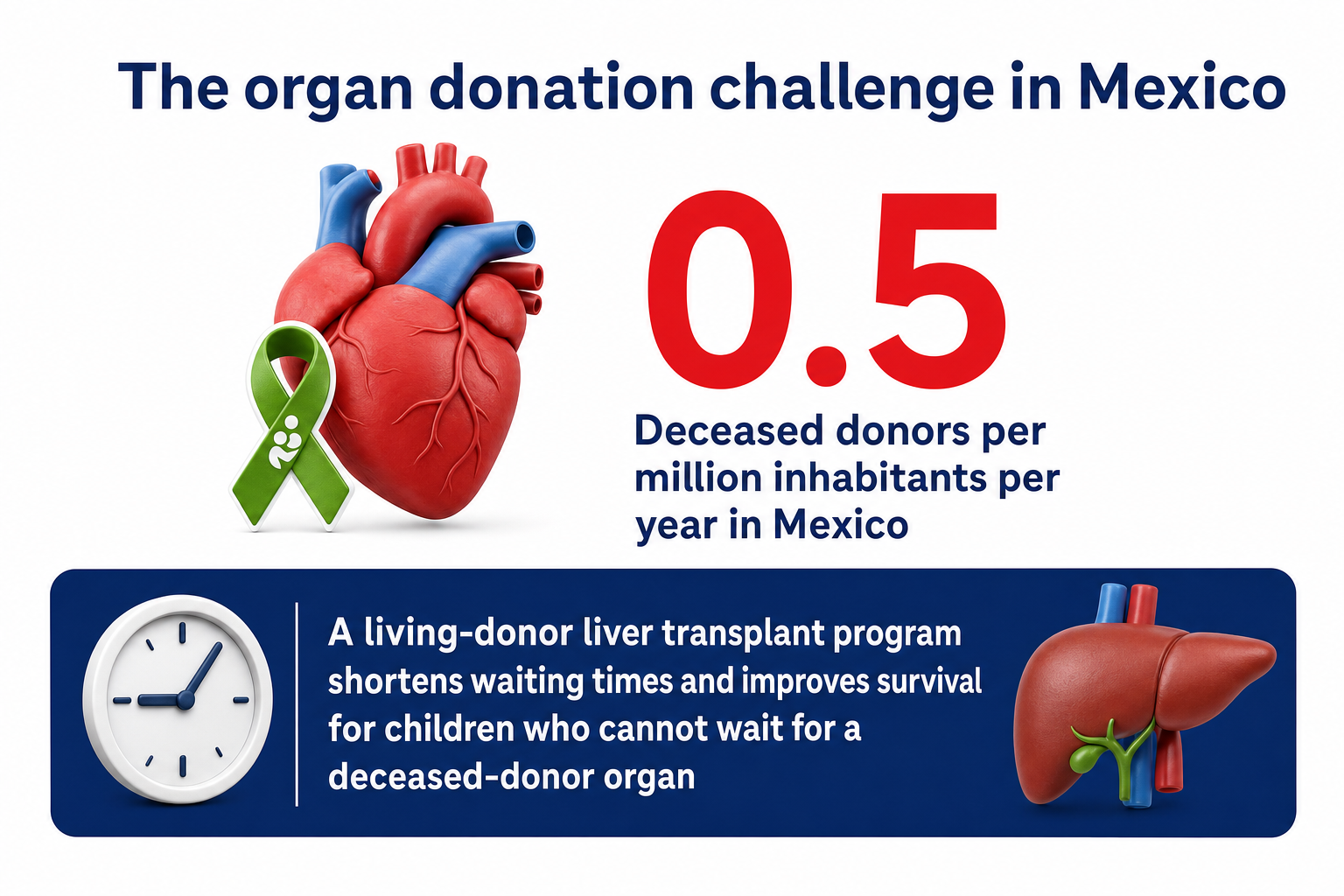
Mexico needs more living-donor programs
With just 0.5 deceased donors per million inhabitants, the need for living-donor transplants in Mexico is urgent. A pediatric living-donor program reduces waiting times, improves survival rates, and ensures children receive care that can save their lives before it's too late.

Ailani's support network, outside the National Institute of Pediatrics (INP) — no one faces this battle alone.

Every visit to the National Institute of Pediatrics is one more step toward the surgery that could save her life.
"Thanks to Fight for Life Club, we have increased our capacity to perform pediatric transplants. Their help is essential."
— Dr. Antonio Medina, National Institute of Pediatrics
Special recognition goes to Dr. Manuel Rodríguez-Dávalos, leader of the surgical team and board member of Fight For Life Club, whose vision is transforming pediatric liver transplantation in Mexico.
That week in February was not a stroke of luck: it was the start of a year in which the INP would end up being, according to official CENATRA figures, the hospital with the most living-donor liver transplants in all of Mexico in 2025. You'll see the details in the next section.
5
The National Institute of Pediatrics: 55 years serving Mexican children
None of these achievements would be possible without the institution that makes them possible every day: the National Institute of Pediatrics (INP). Founded on November 6, 1970 by decree of then-president Gustavo Díaz Ordaz — originally as the Children's Hospital of the Mexican Institution for Child Assistance (IMAN) — the INP adopted its current name and status in 1983, formally becoming one of Mexico's National Institutes of Health: decentralized public bodies dedicated to high-specialty medical care, scientific research, and workforce training.
Today, more than five decades later, the INP is a national and international reference in pediatrics. According to institutional figures, more than 95% of the patients it treats require third-level or high-complexity services — that is, the most complex cases in the country, the ones other hospitals cannot resolve.
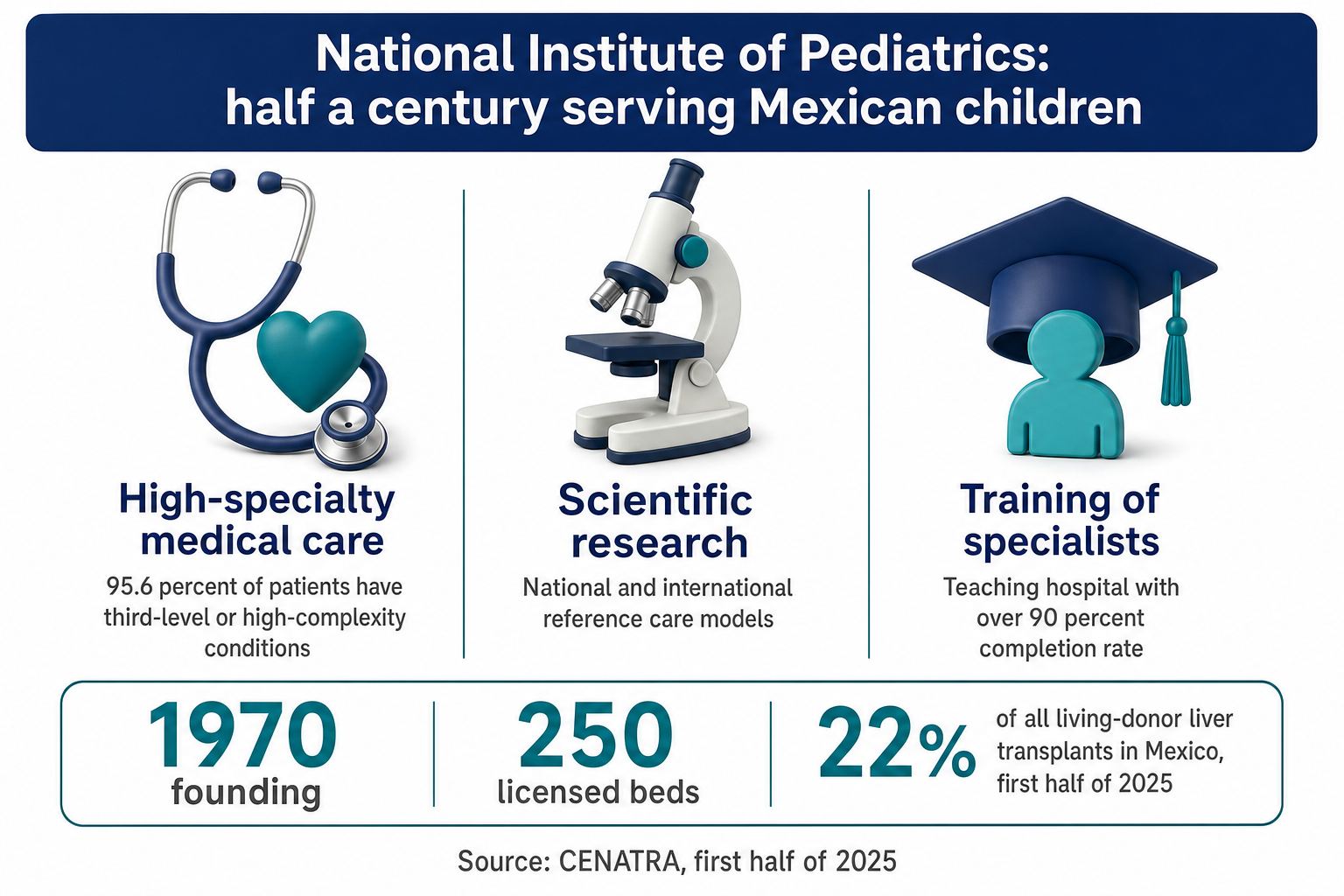
1970
founding year, inaugurated by President Gustavo Díaz Ordaz
Source: pediatria.gob.mx
~250
licensed high-specialty hospital beds
Source: INP Statistical Agenda
95.6%
of patients treated require third-level or high-specialty services
Source: INP Institutional Program 2025-2030
#1 nationally
the INP in living-donor liver transplant — 5 of Mexico's 14 cases in 2025
Source: CENATRA, BEI-CENATRA Vol. X, 2025
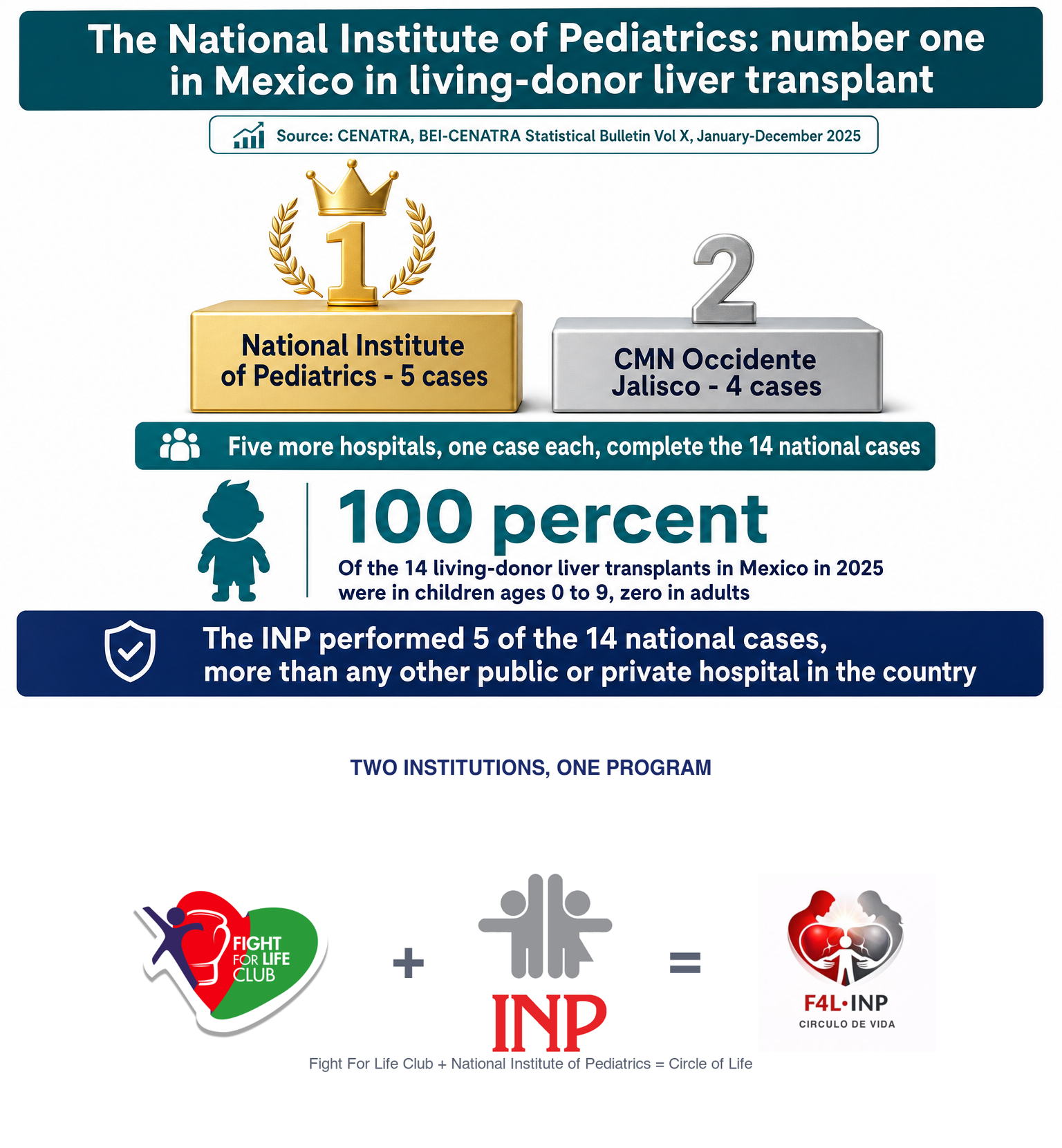
Source: CENATRA, BEI-CENATRA Statistical Bulletin, Vol. X, January-December 2025 (SIRNT, as of January 15, 2026).
CENATRA's official 2025 figures confirm something extraordinary: of the 14 living-donor liver transplants performed in all of Mexico that year, the INP performed 5 — more than a third of the national total — putting it in first place among the seven hospitals in the country that performed at least one, ahead of social-security institutions and private hospitals with far greater installed capacity. And there's an even more revealing fact: 100% of those 14 living-donor liver transplants were performed on children ages 0 to 9; none on an adult. In Mexico, living-donor liver transplantation is, today, an almost exclusively pediatric procedure — and the INP leads that effort.
This national first place is not the merit of a single institution: it is the tangible result of the agreement and alliance between the INP and Fight For Life Club, a shared effort in which each party contributes what the other could not sustain alone. The INP provides the clinical infrastructure, the medical team, and the surgical decision-making; Fight For Life Club provides supplies, specialized equipment, and financial backing, case after case. Dr. Antonio Medina, of the INP, put it best in the previous section: "Thanks to Fight for Life Club, we have increased our capacity to perform pediatric transplants." The INP's national leadership in 2025 is, at bottom, proof that well-structured public-private alliances work — and that when they do, they transform real lives.
The need remains great: at the close of 2025, 190 people of all ages remained on the national liver waiting list, of whom at least 48 were girls, boys, and adolescents ages 0 to 19 — one in every four.
The INP's Surgery and Transplant department is part of its high-specialty offerings, along with oncology, cardiology, nephrology, hepatology, pediatric critical care, and dozens of other subspecialties. In its 2023 report, the Institute documented 8 deceased-donor kidney transplants, 5 living-donor kidney transplants, 3 deceased-donor liver transplants, and 37 bone marrow transplants — a total of 62 transplant and high-complexity procedures in a single year.
But the INP's contribution goes beyond direct medical care: it is also a teaching institution. As a teaching hospital, it trains specialists in pediatrics, genetics, dentistry, and dozens of subspecialties, with completion rates that in recent years have exceeded 90-100% in several programs. Every doctor trained there multiplies specialized pediatric care capacity throughout Mexico, not just within its own walls.
6
A public-private collaboration model that can be replicated
The collaboration between Fight For Life Club and the National Institute of Pediatrics began in 2022, and in 2024 it was formalized through a collaboration agreement signed on October 4 of that year (Instrument number C/C/16/73/2024). It is a concrete — and documented — example of how collaboration between a public health institution and a private philanthropic organization can expand access to highly complex treatments for the families who need it most.
The agreement precisely establishes who contributes what, avoiding the ambiguities that often derail this kind of alliance:
INP providesClinical infrastructure
Hospitalization, intensive care, operating rooms, recovery rooms and emergency services, plus lab, imaging, blood bank, nephrology, hepatology, and hemodialysis.
F4LC providesSupplies and specialized team
The equipment, healing materials, and medications the INP cannot provide, as well as specialized doctors with the necessary capacity and experience, recommended by the foundation and authorized by the INP.
Joint goalInternational training platform
Both parties commit to building an international training and education platform for liver and kidney transplants, multiplying the impact beyond each individual case.
The agreement designates a Technical Committee with representatives from each institution — for the INP, Dr. Francisco Antonio Medina Vega and Lic. Esperanza Vidales Nieto; for Fight 4 Life, Dr. Manuel Rodríguez Dávalos and Lic. Alan Gabriel Contreras Saldívar — responsible for approving each action, monitoring results, and, notably, designating the patients who benefit collegially, not unilaterally. It has a two-year renewable term and is governed by the jurisdiction of the Federal Courts of Mexico City.
This agreement demonstrates that public-private collaboration, when well structured, with clear roles and joint oversight, can close healthcare access gaps that neither party could close alone. It is a model that health institutions, foundations, and government authorities in other Mexican states — and other countries — can study and replicate.
You already know the alliance. You already know the results. Now, the decision is yours.
The INP and Fight For Life Club have already proven this model works, backed by official figures. The 4 children waiting today need exactly what Ailani already received: a community of donors willing to act.
Donate now
7
Two lives, one surgery
On surgery day, two operating rooms work in parallel: in one, the team carefully removes the donor's liver portion (usually a parent). In the other, the child's diseased liver is removed and prepared to receive the new segment. It is a medical choreography of the highest precision, involving dozens of specialists.
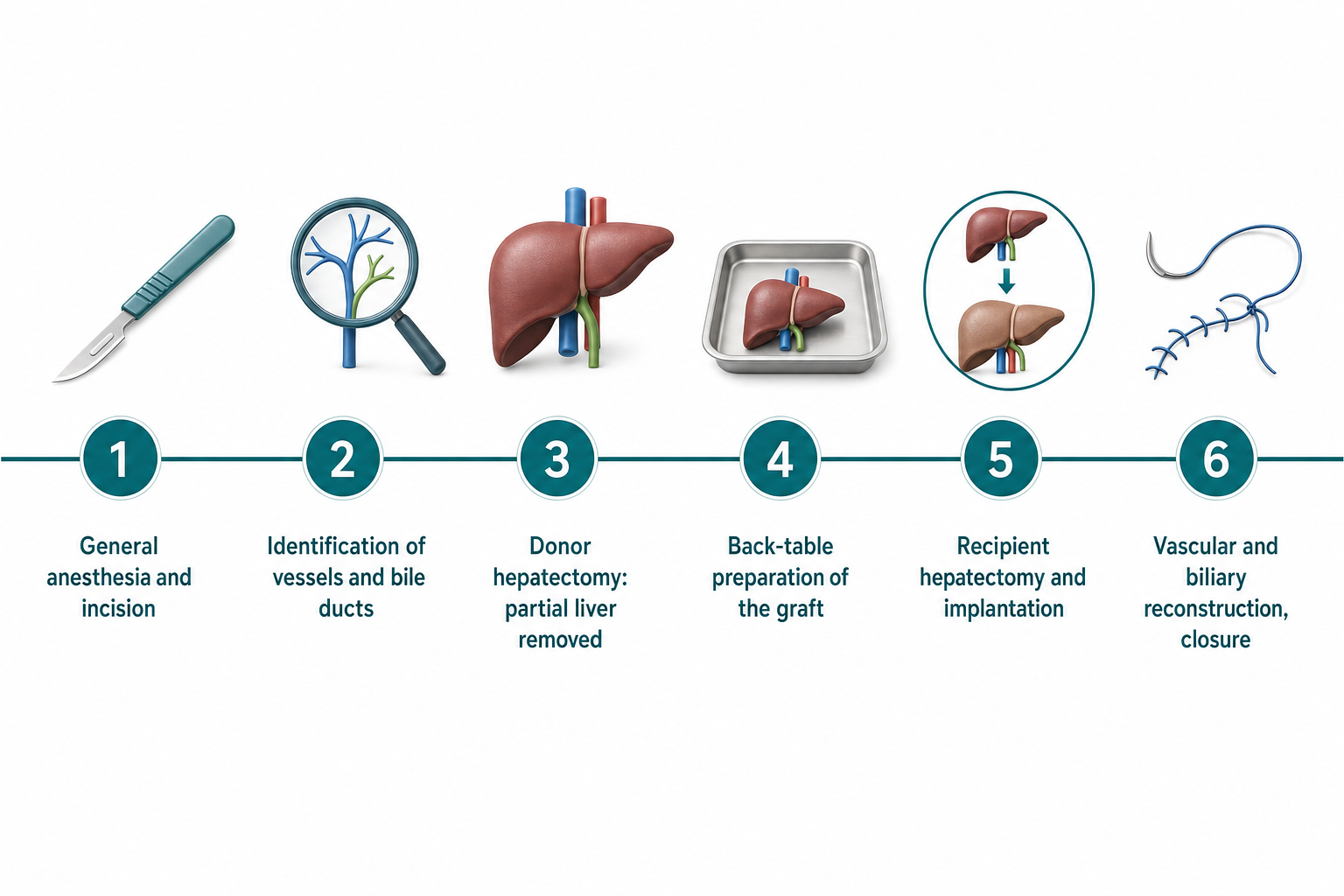
From the donor's operating room to the recipient's: the 6 steps of living-donor liver transplant surgery.
Before reaching that day, both the child and the potential donor go through a rigorous evaluation process that can take several weeks, designed to protect the safety of both.
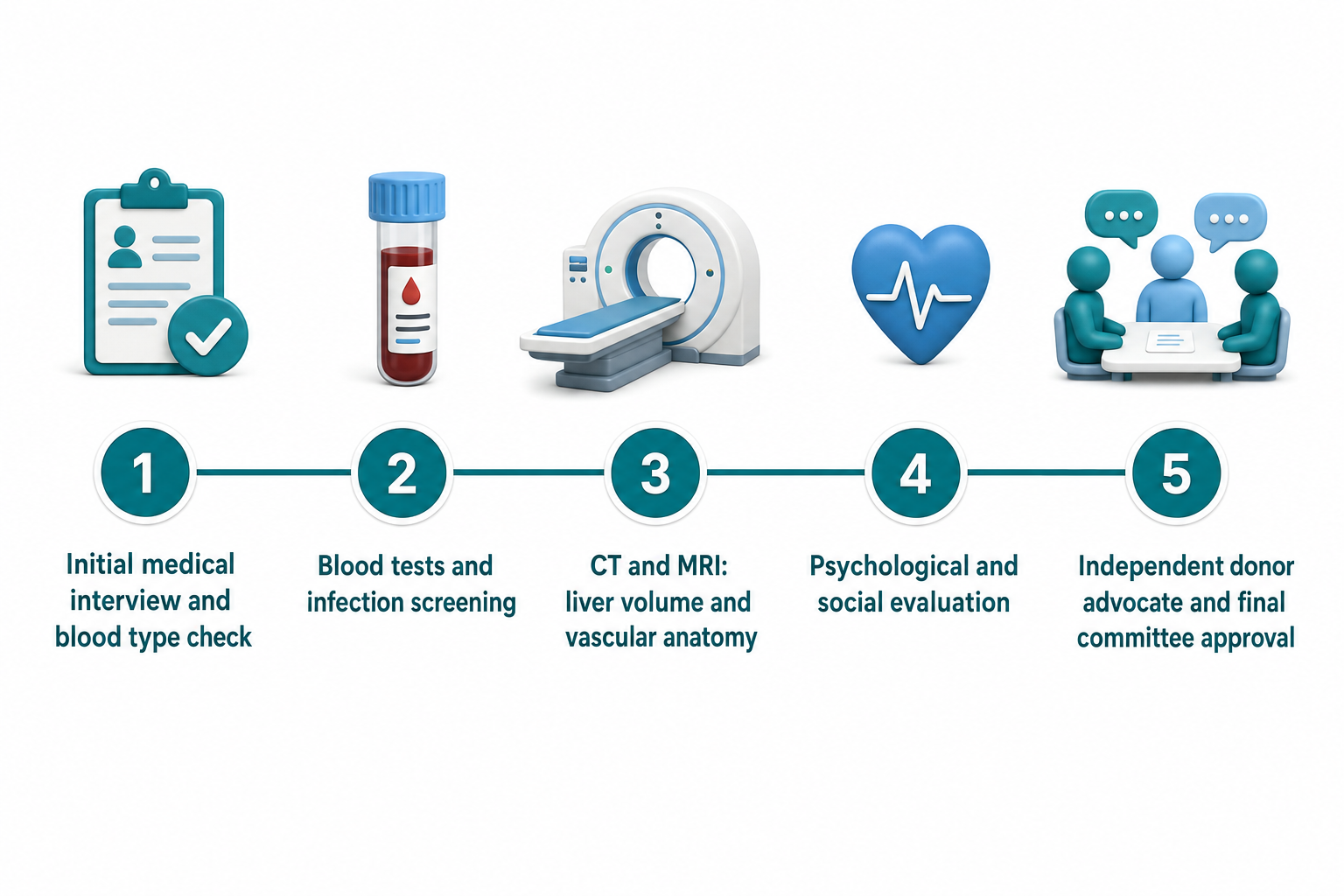
No donor reaches the operating room without going through these 5 stages of medical and psychosocial evaluation.
8
Donor safety comes first
The donor's altruism does not exempt the medical team from an unavoidable responsibility: protecting their health as much as the child recipient's. Living liver donation is major surgery in a completely healthy person, and the medical literature is clear and honest about its risks — none of them hidden from families before they decide.
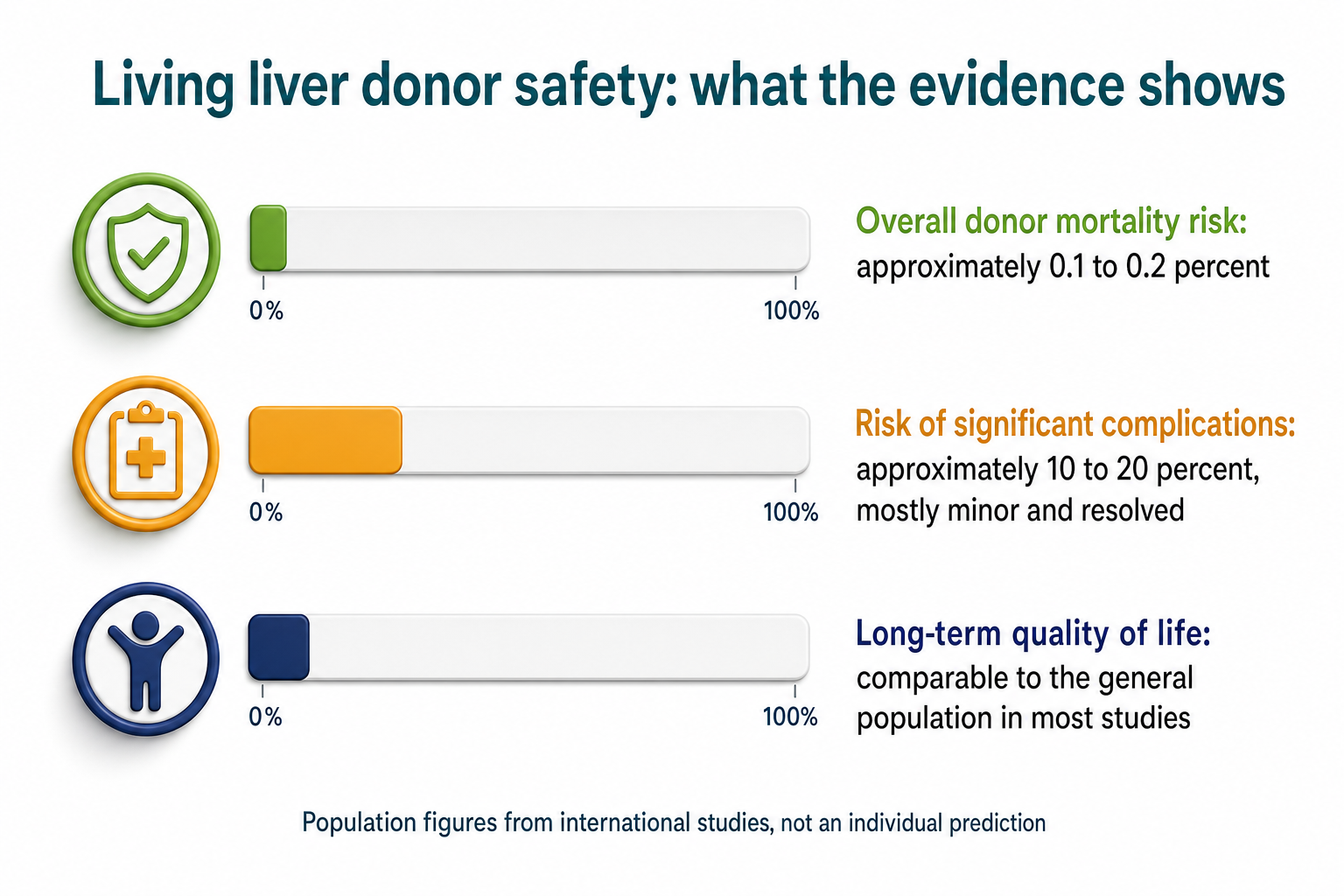
Population-level figures from international studies — they do not represent an individual prediction, but they explain why the donor evaluation is so thorough.
That's why the evaluation process is not a simple formality: there is an independent donor advocate whose sole job is to make sure the decision to donate is completely free, without economic, family, or emotional pressure, and that the donor can withdraw from the process at any time without giving explanations. Donation is always voluntary, informed, and without any financial compensation.
9
Life after the transplant
Surgery day is not the final goal: it's the start of a new stage. Both Ailani and her donor uncle had different recoveries from one another, and both require long-term medical follow-up — the same path that the 4 children hoping to follow in her footsteps are walking today.
~1 week
typical donor hospitalization after surgery
Source: American Liver Foundation
Lifelong
the recipient requires immunosuppressant medications to prevent graft rejection
Source: pediatric liver transplant literature
6, 12, and 24 months
standard donor follow-up checkups after donation
Source: American Liver Foundation
For the donor, fatigue and discomfort at the incision site can persist for several weeks, though most return to normal life within a few months thanks to liver regeneration. For the child recipient, the challenge is different: learning to live with an immune system "silenced" by anti-rejection medications, which requires constant infection monitoring, periodic lab checkups, and, over time, increasing autonomy in caring for their own health.
Neither story ends in the operating room. That's why Fight For Life Club doesn't just fund the surgery: it also supports the family through recovery, because a second chance at life is built day by day, not just on transplant day.
10
Circle of Life: how we make every transplant possible
Circle of Life: that's the name, today, of the program that already gave Ailani her second chance.
Every transplant that Fight For Life Club supports follows a model called Circle of Life, developed jointly with the INP: a 6-week cycle with clear rules, total transparency in fund management, and one core premise — surgery never waits for money; fundraising runs in parallel, not afterward.
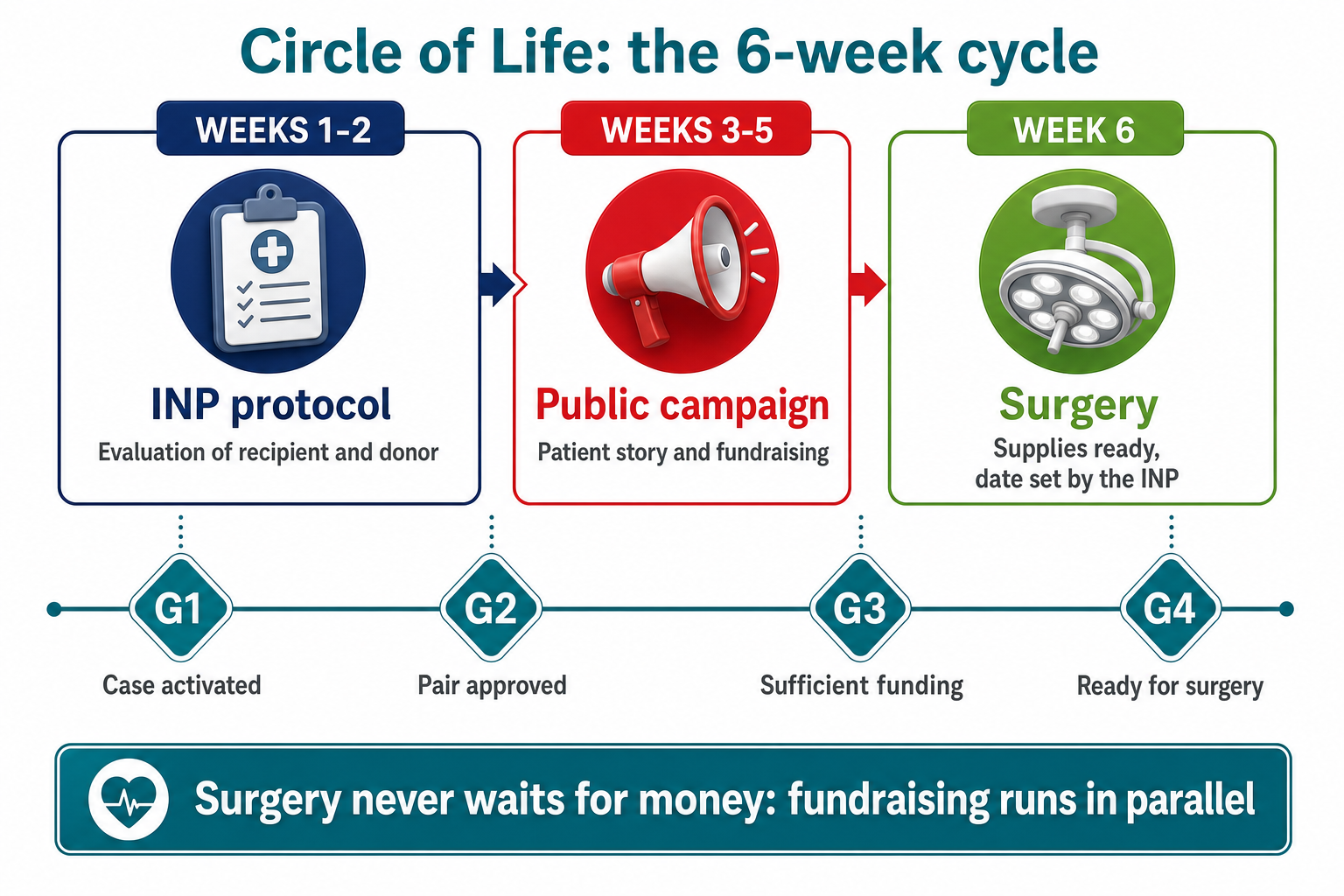
Three phases, six weeks, four decision gates: this is how every case moves forward, from activation to surgery.
G1Case activation
INP Social Work confirms the recipient and a family donor under evaluation, and authorizes contact with F4LC. Maximum 3 business days.
G2Public launch
The Transplant Committee approves the recipient-donor pair. The fundraising campaign goes live within a maximum of 3 days.
G3Date scheduling
Once 80% of the funding goal is reached, and with the patient clinically stable, the INP schedules the surgery date.
G4Ready for surgery
Supplies delivered and verified by the INP, consent forms valid. The transplant takes place.
Maximum Foundation support cap: $225,000 MXN per case (tax included)
$210,000 · Transplant supply kit
$15,000
Paid directly to the supplier, against invoice (CFDI)
Multidisciplinary medical team, never tied to a specific case
Every peso donated goes directly to treatment: the surgical supply kit is paid directly to the supplier against invoice. Fight For Life Club never hands over cash or deposits to the family — this is how we guarantee your donation reaches exactly where it's needed most.
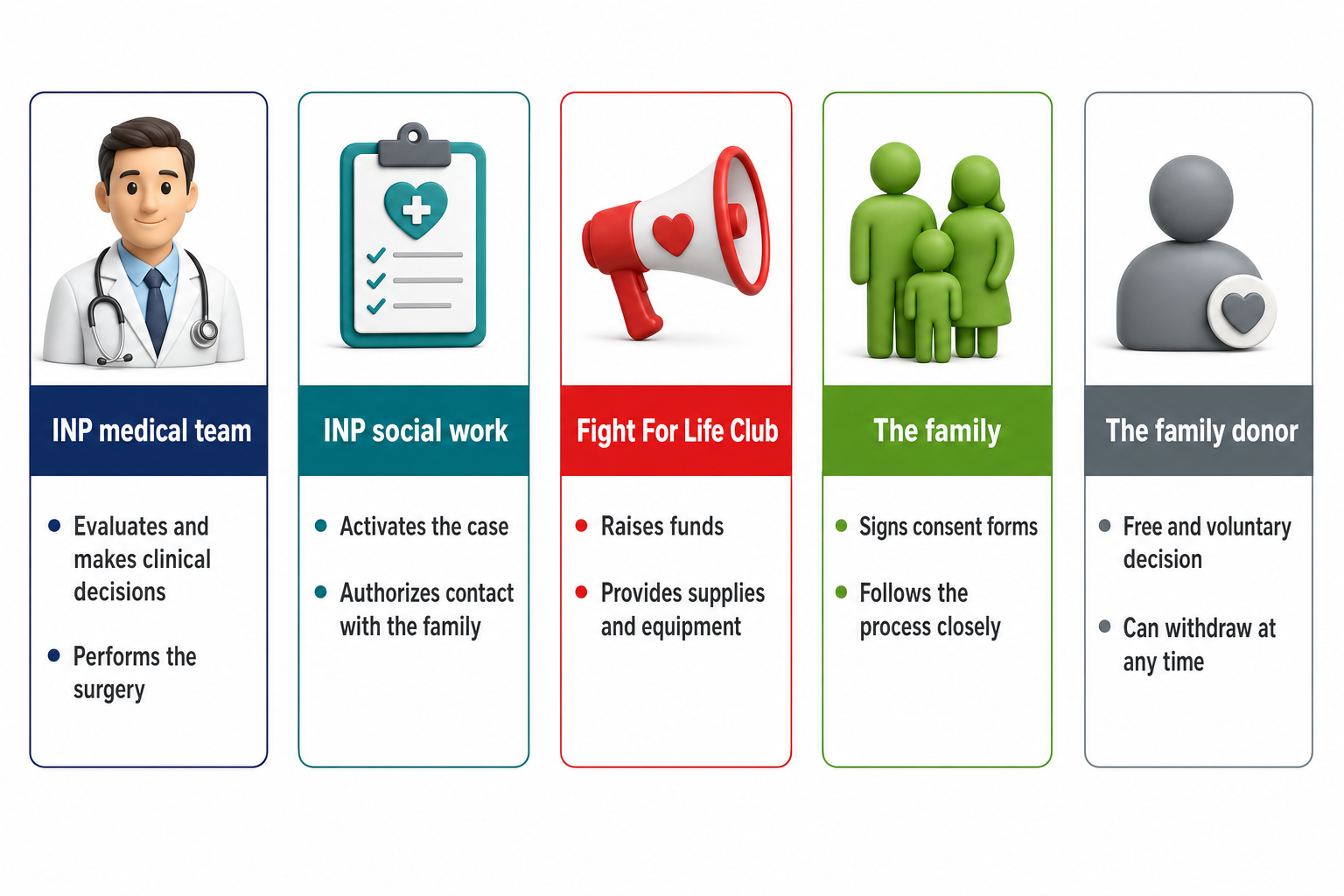
No one in this circle works alone. Each role has a specific and complementary responsibility:
★
The first 8 children we supported
Before Ailani and the four children waiting today, Fight For Life Club had already stood beside eight children at pivotal moments in their care. They are Arami Azul, Mateo, Keren, Fátima, Brian Saúl, Valeria, Citlaly, and Jhonny — the first faces of a community that chose to turn solidarity into real support.
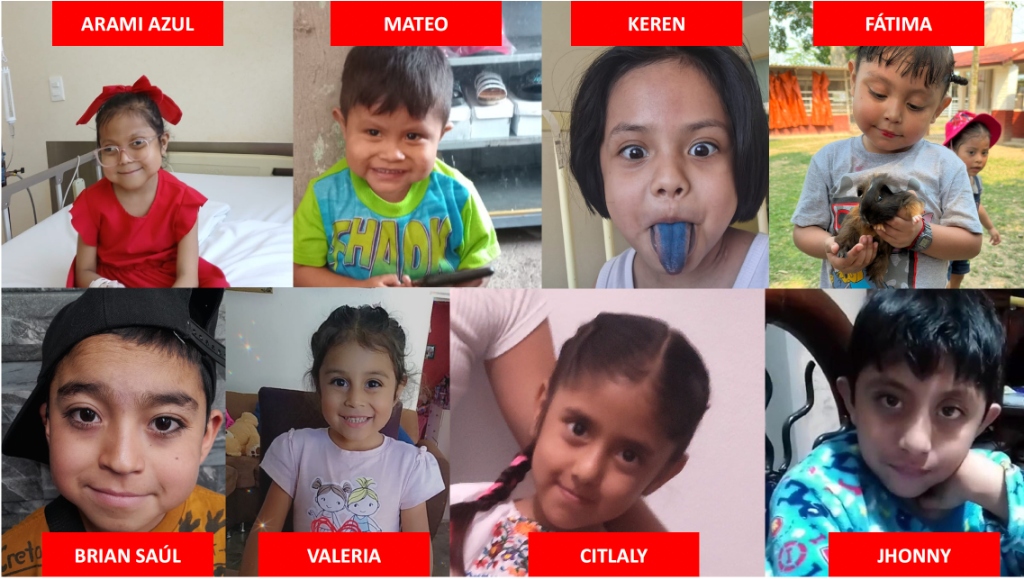
Arami Azul, Mateo, Keren, Fátima, Brian Saúl, Valeria, Citlaly, and Jhonny — the first eight children supported by Fight For Life Club.
Their photographs represent the human beginning of this mission. Each child received support tailored to their family's needs; this image does not attribute individual diagnoses, procedures, or medical outcomes.
11
Why we fight: our founder's story
Fight For Life Club was founded by José Manuel Cadena Ortiz de Montellano, who is himself a liver transplant survivor. After receiving his own second chance at life, he decided that no child in Mexico should die waiting for a transplant simply for lack of financial resources.
Since then, the foundation has supported at least 8 children through their care journeys, including liver transplants or major liver surgeries, including a campaign that raised 1.5 million pesos for a double surgery, and has facilitated 2 pediatric living-donor liver transplants in a single historic week alongside the INP.

Life goes on between appointments: every Fight For Life Club champion also deserves their days of being a kid.
"Seeing my daughter's smile after her transplant is priceless. Thank you for giving us hope."
— Mother of Azul, transplant patient supported by Fight For Life Club
12
Frequently asked questions from families
How do I know if my child might need a liver transplant?
Warning signs such as yellow skin or eyes (jaundice) that don't go away, a distended or hard abdomen, unusual bleeding, growth delay, or extreme fatigue should be evaluated immediately by a pediatrician. Only a pediatric hepatology team can determine whether a transplant is needed.
Can any family member be a donor?
No. The potential donor must be a legal adult, of sound mind, and must pass a complete medical, anatomical, and psychological evaluation. Blood type compatibility is just one of several factors; liver volume and the anatomy of their vessels and bile ducts are also evaluated.
Is the donor at risk?
Liver donation is major surgery with real, though infrequent, risks (see section 8, "Donor safety comes first"). That's why there is an independent donor advocate and an evaluation process designed to protect the donor's safety as much as the recipient's.
How much does a transplant cost and who can pay for it?
The cost of the surgical supply kit and materials can exceed $300,000 MXN. Fight For Life Club covers up to $225,000 MXN per case; the difference is covered by the public fundraising campaign, never by requesting cash payments from the family.
What happens if my child doesn't have a compatible family donor?
The medical team evaluates alternatives, including the possibility of the deceased-donor waiting list. Fight For Life Club and the INP support the family in evaluating all available options.

A second chance: that's what a living donor makes possible.
The INP–Fight For Life Club alliance is already #1 in Mexico. Ailani is the proof. 4 more children need you today.
The agreement between the National Institute of Pediatrics and Fight For Life Club has already proven something few public-private alliances can prove with official figures: together, they are today Mexico's number-one team in living-donor liver transplant. Ailani is living proof that this model works — today she has a second chance at life thanks to this shared effort. Now there are 4 more children on the waiting list, some in more critical condition than hers. Your donation, no matter the amount, brings one of them one step closer to their surgery.
I want to help the next 4 children
Important medical note: This article is for informational and awareness purposes. It does not replace a medical evaluation. Every hepatoblastoma case and every transplant decision is evaluated individually by the treating medical team at the National Institute of Pediatrics. The statistics cited come from international medical literature and published clinical series; they do not represent a guaranteed outcome for any particular patient.
Cited sources
- Boster et al. (2022). "Predictors of survival following liver transplantation for pediatric hepatoblastoma and hepatocellular carcinoma." American Journal of Transplantation. DOI: 10.1111/ajt.16945.
- Sakamoto et al. (2024). "Liver transplantation for pediatric liver malignancies." Liver Transplantation. DOI: 10.1097/lvt.0000000000000470.
- Pham et al. (2015). "Effect of Liver Transplant on Long-term Disease-Free Survival in Children With Hepatoblastoma and Hepatocellular Cancer." JAMA Surgery. DOI: 10.1001/jamasurg.2015.1847.
- Li et al. (2025). "Living-donor availability improves pediatric patient survival in a large North American center." Liver Transplantation. DOI: 10.1097/lvt.0000000000000629.
- Surgical review of unresectable hepatoblastoma and transplant. Cancers (MDPI), 2019.
- Review of transplant strategies in hepatoblastoma. OAE Publishing, 2022.
- Revista Mexicana de Cirugía Pediátrica, 2015 — review of hepatoblastoma in the Mexican pediatric population.
- Fight For Life Club Foundation — fightforlifeclub.org / fightforlifeclub.org.mx (institutional content, testimonials, impact figures).
- "Circle of Life" manual — Collaboration Agreement, Fight 4 Life, Inc. – National Institute of Pediatrics (foundation internal document).
- American Liver Foundation. "A Donor's Guide to Living Donor Liver Transplant" — donor hospitalization, follow-up at 6/12/24 months.
- Mayo Clinic. "Living-donor transplantation overview" — donor risks and liver regeneration.
- National Institute of Pediatrics. "50 Years Making History (1970-2020)" — pediatria.gob.mx.
- National Institute of Pediatrics. Institutional Program 2025-2030 and 2023 Work Program — installed capacity, transplant, and completion-rate figures.
- Secretaría de Salud, Government of Mexico. "The National Institute of Pediatrics Turns 51 as a World Reference in Care."
- Collaboration Agreement INP–Fight 4 Life, Inc., Instrument C/C/16/73/2024, Mexico City, October 4, 2024 (foundation source document).
- Society of Pediatric Liver Transplantation (SPLIT) and the U.S. pediatric transplant network (2011-2013) — distribution of pediatric liver transplant indications.
- Fanna et al. (2019). "Management of Biliary Atresia in France 1986-2015: Long Term Results." Journal of Pediatric Gastroenterology & Nutrition. DOI: 10.1097/mpg.0000000000002446.
- Witt et al. (2018). "Prognosis of Biliary Atresia After 2-year Survival With Native Liver: A Nationwide Cohort Analysis." Journal of Pediatric Gastroenterology and Nutrition. DOI: 10.1097/mpg.0000000000002130.
- Leal-Leyte et al. (2025). "Pediatric-Deceased Donor Livers in Mexico: How Current Policy Disadvantages Children." Pediatric Transplantation. DOI: 10.1111/petr.70144 — CENATRA National Transplant Registry, 2014-2024.
- CENATRA (National Transplant Center, Secretaría de Salud). "BEI-CENATRA Statistical Bulletin", Vol. X, January-December 2025 period. SIRNT, as of January 15, 2026. gob.mx/cenatra/documentos/boletin-estadistico-informativo.
- CENATRA. "Current Status of Recipients, Donation and Transplants in Mexico, 1st Half of 2026." SIRNT, as of July 3, 2026. gob.mx/cenatra.
- National Institute of Pediatrics. Government Management Report (January-June 2024) and 2026-2031 Work Proposal — institutional liver transplant figures 2024-2025.